|
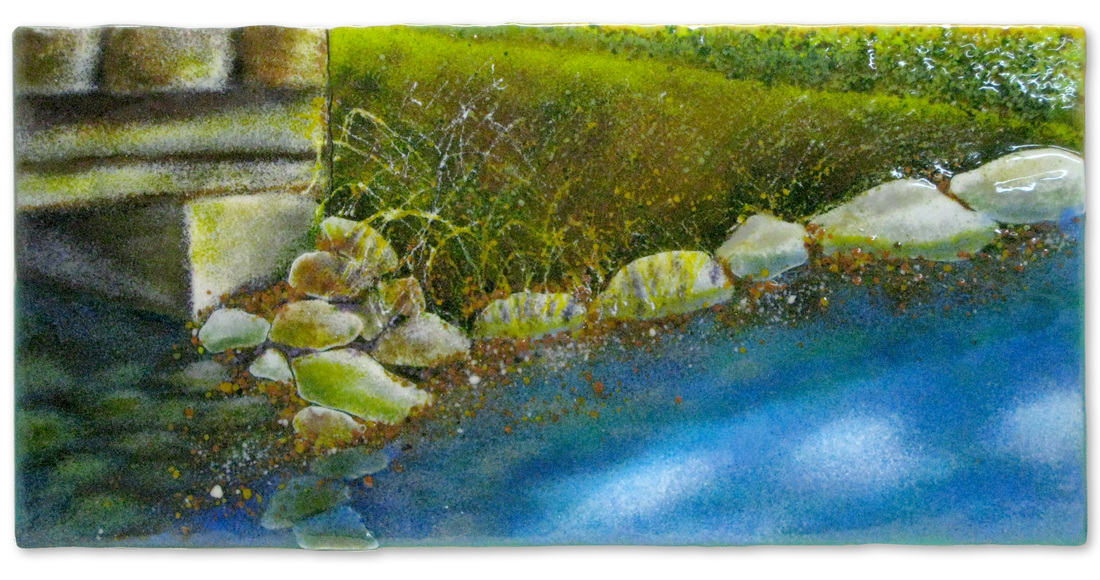
11/29/2015 0 Comments crossing over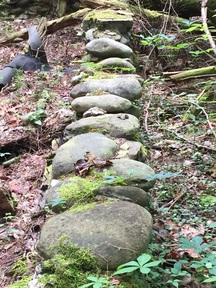 CROSSING OVER Just outside Gatlinburg, TN there's the remains of an old, mostly torn down, resort from the 20's. Crumbling foundations, steps that go nowhere, and as I walked around the site, I found a perfectly-laid line of stones that must have once been someone's dream cottage. Beginnings! We start out running, giddy with invincible youth. Endings come, often filled with sorrow, and sometimes mixed with relief! But the journey continues and eventually there are times of just putting one foot in front of the other with no idea of where we're really going. And then we crossover into one of those transition point in life where you move on, at whatever speed from uncertainty and sorrow to just enjoying the path, however unsteady.. Sometimes crossing over is as quick as choosing to be in the moment. Other times it takes a mental shake, a reminder to focus on the good, rather than the bad. And then there are times when must reach out, for we cannot, we dare not, cross alone. 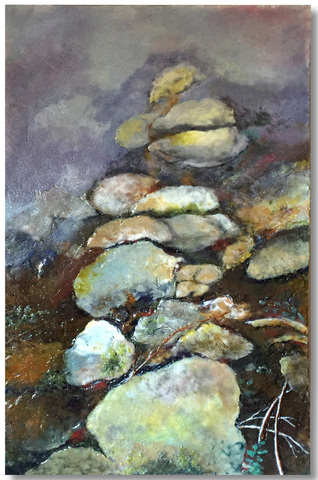 CROSSING OVER by Anne Wren Nye Kiln Glass Wall Panel 32 x 20". 2015
0 Comments
8/23/2013 3 Comments In Defense of Beauty I have a question. I’ve had this same question for a long time. It’s about beauty. Why is it that the art world seems to gravitate to ugliness? The question may sound naïve but let me tell you a story….a rather embarrassing one. After art school I was exhausted and sick of cities and went home to Idaho where I would make my living as a painter. The California art school taught me that it wasn’t so much how you painted as what you painted. It quickly knocked the idealized subject matter out of me and taught me to paint ugliness because that is what was recognized and accepted there. A beautiful scene or figurative work was severely disparaged. I clearly remember one prof coming up behind me as I was painting saying, “Well, isn’t that utsey cutesy?” I didn’t do that again. So, I set myself up in a nice little tourist town in Idaho and began to paint. I painted the pain and ugliness of my childhood, not the beauty of the trees, rivers and mountains I had grown up with and loved. That was my heart. But I didn’t paint my heart, I continued to paint what I’d been taught was ‘good art.’ It was met with either polite silence or open dislike. Understanding finally came when a wealthy art collector asked me to take a few of my paintings to his beautiful Sun Valley home. I was soooo excited! This was the break I had known would come. I carefully took my paintings, so full of my hurt and pain of my childhood into his serene, Asian-style home. I so believed what I’d been told about my work that I didn’t even see the jarring ugliness of them against the calm and peace of the home. When I answered the ringing phone a couple of hours later, an angry man was on the other end of the line. “Why would you think I would want THIS ugliness in my home? Come get them immediately, they will be on the porch.” No surprise that I never heard from that man again. It was a very hard, life-changing lesson that I don’t think I fully comprehended at the time. Part of me knew the truth but for a while I defended my work thinking that area too rural and unsophisticated, etc. I moved around and finally traded my art for a regular paycheck doing graphic design. But my spirit was deeply injured to the point that only now, some thirty years later, I am finally creating from my heart again. I recently discovered the poet, John O’Donahue’s writings about beauty. I listened to a podcast from a wonderful NPR program called “Being” narrated by Krista Tibbets. O’Donahue talks about creativity stemming from an ‘rich inner life’. This resonated with me and helped me re-examine my motivations during those years of art school. I believe there is a place for using art to work through pain and suffering. And sometimes these become valuable documentaries of tragedy such as the works that came out of 911 or Katrina. But most people do not want to live with such work on their walls. In the same way, we cannot create art just to make money or to keep up with the latest fad. People tell me all the time that I should paint in this style or that because it is what the collectors or designers want. And foolishly, I sometimes try. But it seldom is successful. (To my mind this is different than artists having a line of production work is their ‘bread and butter.’ But even in the ‘bread and butter’ work there should be a continuity and thread of truth that comes from the heart of the artist. ) People need beauty and artists must find a way to present beauty that is good art. It must come from a rich inner life that is nourished with beautiful art, music and words. That is one of my main goals...to create with my heart. 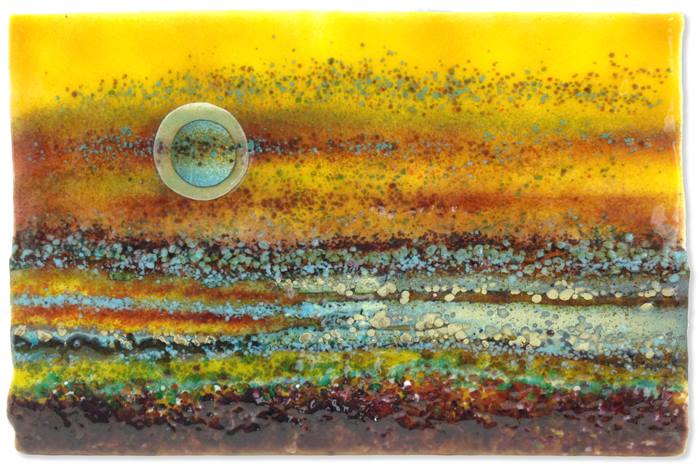 Journeys…A Painter’s Reactions to Glass
Solo Show, Anne Nye Opening Reception Friday October 4th 5pm - 9pm Blue Pomegranate Gallery 6570 Maple Street • Omaha NE 68104 12/6/2012 2 Comments Mantras In My Mind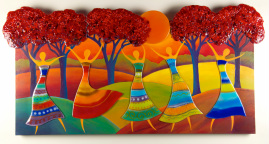 AUTUMN DANCERS 50" x 27" I don’t know about you, but my head is a busy place. Especially when I’m working on an art piece I seem to channel the instructive sound bites of every art professor I ever had as well as those of my mother, all mixed in with old song lyrics!
All this noise was exhausting and counterproductive until several years ago when I read The Artist’s Way. This helped me “journal out” all these voices and filter them. Many were failure messages like: “You can’t do _____,” or “You’ll never ______,” and "You’re not ________” (fill in the blanks.) Once exposed and answered, these began to fade into the background so I could begin to hear the good stuff, but first I had to weed out the negative. For the complete blog, see "Mantras In My Mind" on Anne's Wordpress site! 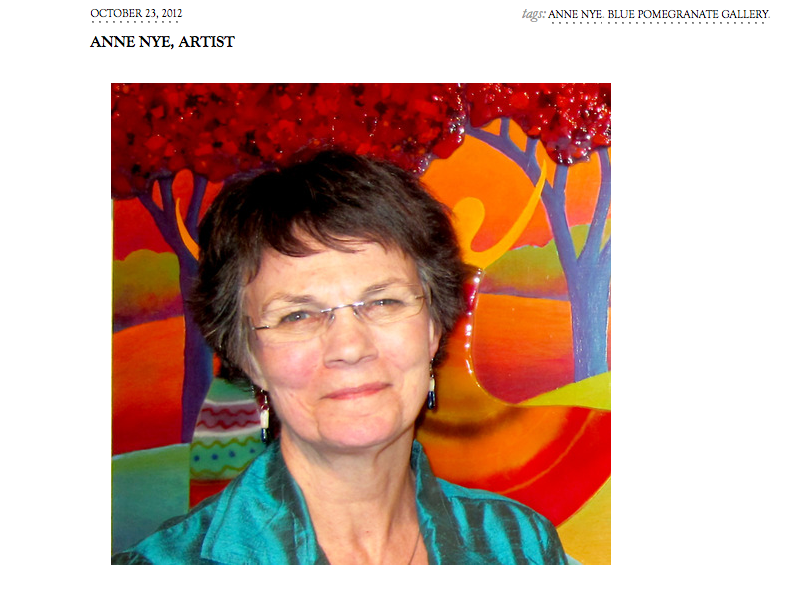
Anne shares with Sally about her newest exhibit, what inspires her, and her journey in becoming a fine artist. Read the full article here.
7/20/2012 6 Comments THE NIGHT THE COLORS WOKE ME UPIt started as a small, niggling yet urgent, irritation in my dreams. Like an itch I couldn’t quite reach or an unremembered name. A germ of an idea was grinding in my brain like sand in an oyster. Grudgingly I awakened and lay there thinking…. could I return to sleep? If I do, will I be able to capture it again. What was going on tomorrow; and if I get up now, how tired will I be in the morning? Is this grain of sand worth going downstairs to my studio? Will it become a pearl or end up as a crumpled ball of energy thrown with the rest into the wastebasket of my mind? But the voices of the colors are too strong and sleep will not return, and so I am at their mercy. In the dark I grab clothing trying not to wake my softly snoring husband. As I go down the stairs to the studio my steps lighten with excitement… the glass is waiting for the colors! 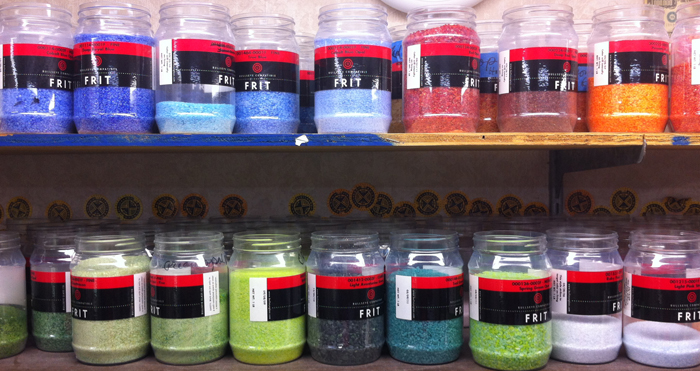
Jars of crushed glass frit line the shelves standing at attention in their rainbow hues. Like good friends, my favorites leap into my hands: Pumpkin and Tangerine Orange, Emerald and Spring Green, Gold Purple and Pimiento Red dance onto my canvas of white glass sparkling like tiny jewels. My hands move them into patterns, layering, shading, tinting… knowing how it’s supposed to be. But wait, what if……I come out of my dream-like knowing and begin to doubt. The doubt allows the canvas to mock me with its stark emptiness, daring me to violate its pristine white. Yet the colors call, “Come and play!” And play is what I must do. I grab the joy and silence the doubts and jeering canvas. Triumphantly I cry, “Ha! Who’s in control now?” 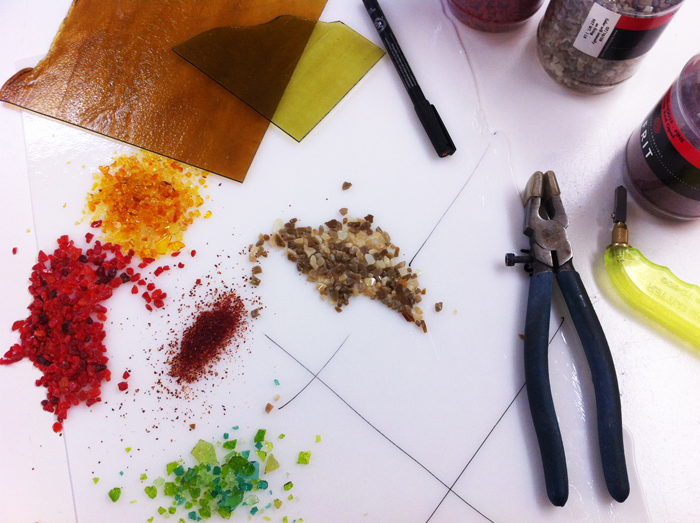
My art professors voices ring in my ears. “Don’t get too careful too soon!” “Work the painting as a whole!” “Use the golden section in your composition!” “Let the painting speak to you.” On and on it goes and though it’s all good, I must not let the rules drown out the colors. So I let them play: Green joyfully bodyslams into red, blue encircles yellow and sweet shades of orange romp across the space with several shades of purple. The professors again: “Don’t use colors straight out of the tube! Mix using hues opposite the color wheel!” My thoughts: “Will this sell? Will it match someone’s couch? Do I care? Does it matter?” It’s a delicate dance with intuitive creativity partnering with artistic training. I am the choreographer and the music is the color….expensive music, as it happens. I firmly push worries about the cost of the materials I’m using and the doubts about saleability out of my way and continue with the composition, putting in darks and adding highlights. 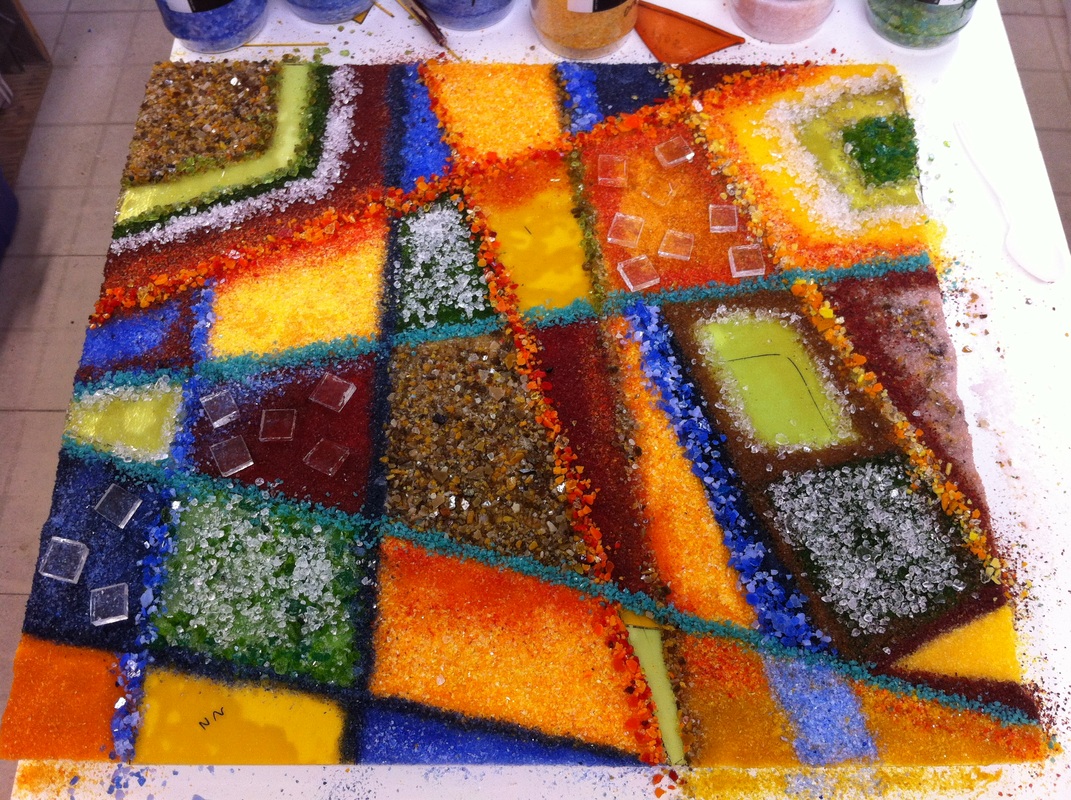
Finished piece before firing.
Finally it’s finished. Satisfied and exhausted I open my kiln and gently lay the piece inside. Like a mad scientist trying to bring life to inanimate tissue, I punch the complex schedule into the kiln’s computer in what I hope is just the right combination of heating and cooling. Latching the coffin-like kiln lid, I say a prayer to launch the bits of glass on their metamorphic journey. Twenty-four hours and up to 1420˚F will melt them into what I hope will be the beginning of a beautiful new series of Anne Nye art. Smiling, I climb the stairs to see if I can grab a few hours of quick sleep. The dawn’s colors stream through the windows bidding me farewell……. until the next time. 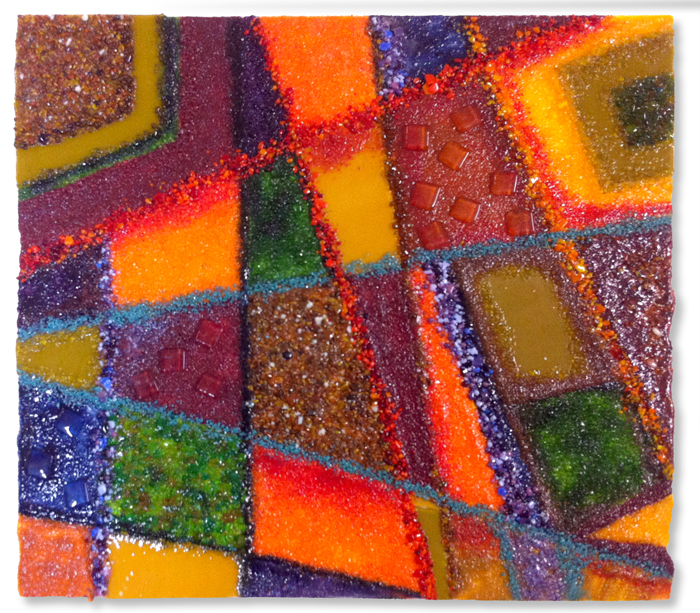
"COUNTERPOINTE" 18 X 20 inches Kiln-formed glass wall art.
6/17/2012 2 Comments TESTING, TESTING…. 1, 2, 3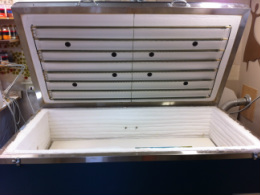 My 30 x 60" Denver Glass Machinery kiln. Glass fusing is an unforgiving medium in several areas: First of all, it’s glass! There is a certain amount of understandable skepticism about it's durability. Secondly, most colors don’t fully mature until fired which is kinda like working blindfolded. Thirdly, you can't just erase an error. The piece has to be re-fired which usually means another day in the kiln and you only get three chances before the glass becomes unstable. As an artist, you have only so many choices. You can just wing it and hope for the best and if it isn’t just right…….awww, just tell everyone “It’s an art piece!” Or make up some “art speak” reason to explain it. Right? In how many art shows have you seen this approach? But at some point, if you’re going to grow and make your living as an artist, you have to begin doing the dreaded 'T' work……..yep, Testing!!!! There is Test Marketing, Stress Testing, Color Testing and just to name a few and many of these apply to other mediums besides glass. 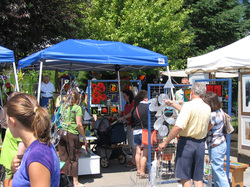 My booth at Countryside Art Fair 2006 TEST MARKETING: Ok, you know your Mom and your family are not the best people to ask and not all of us have the where with all to hire a real focus group. But there are a few low-key ways to test market: 1. STREET FAIRS & ART SHOWS: In this world where everyone gets a blue ribbon, few people will honestly appraise your work. But in the marketplace, clients vote with their wallets. I did a lot of art fairs back in the day, which established me locally as an artist. As exhausting as they were, I learned so much from the direct customer contact. Often they were the best source for new products also. You know you've hit a home run on a product when customers are moved to tears or are fighting over the last one in the display. 2. FACEBOOK: Facebook has provided a community of artists who can give lots of encouragement but probably won't tell you when it's not good. 3. GALLERIES: Many gallery owners, if approached properly, will critique your work for free. 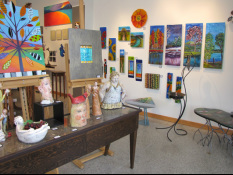 Glass wall art at From Our Hands, Des Moines IA 4. ON-LINE GALLERIES: On-line sales venues like Fine Art America and Etsy provide customer comments that can be very valuable. 5. ART GROUPS: I belong to a small art group and really trust their input. 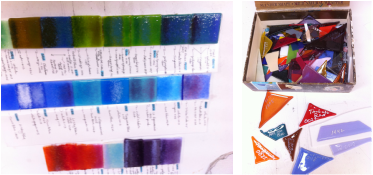 Left, frit samples Right, sheet glass samples COLOR TESTING: When I teach classes, the first part of it is making color test strips made with layers of frit. These are not cute little coasters, they are valuable tools I hope my students will refer to over and over again. I have an old cigar box full of fired color samples from every color of glass I've ever purchased. I make color test strip now for almost every new piece I create unless I'm really sure I know the colors. 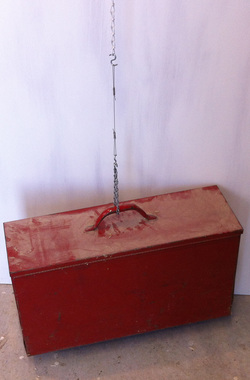 STRESS TESTING:
We’ve had freezers full of glued glass samples and window sills filled with glass glued with different adhesives – all in the name of testing. Here, we're testing the integrity of stainless cable and crimps to be used to hang glass wall art. The tool box is full of heavy wrenches weighing 47 pounds and was left suspended. It will be used to hang glass wall art weighing about 20 pounds. Testing takes extra time and patience but it sure beats surprises! What have you tested lately? I welcome your comments and suggestions for this blog. I was asked an interesting question at my last teaching gig. One of my students looked me right in the eye and said, "Ok, so what motivates you to be so forthcoming and share so much information with us?" It kinda stopped me dead in my tracks and, as usual, I said the first thing that came to my mind: "When I first started out, galleries and other more successful artists wouldn't give me the time of day. I made up my mind then that if I ever got even a little bit successful, I'd do all I could to help other artists along the way!" But maybe it goes a lot farther back than that. I was an only child and though I was given most anything I really wanted, I found it lonely. Talking with my cousins a while back, they remembered that I would give away all my toys just so they would stay and play. So, here I am still giving away my toys because I love what I do and want everyone to join in. Another reason I don't worry about giving away my secrets....... I am easily bored and doing the same thing over and over, year after year is not enough for me. What makes my socks roll up and down is the process. It's the "making" of art.....in whatever medium or style. And, it's the evolution of ideas. This kind of focus turns work into play and I'm hoping if I keep sharing, it will catch on and we'll all play well together and have fun living our dream. So, here's my latest share. It's part of my "Remembered Spaces" series based on photos taken on a recent trip to the Denver Botanical Gardens. Enjoy, and welcome to the playground! 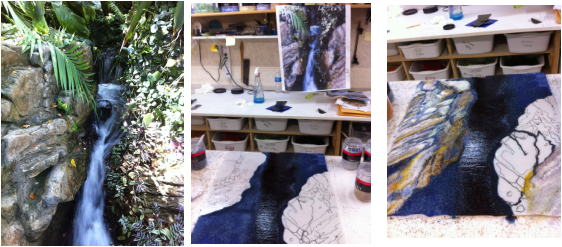
LEFT: photo taken at Denver Botanical Gardens CENTER: Color lay-up RIGHT: Frit shading begins.
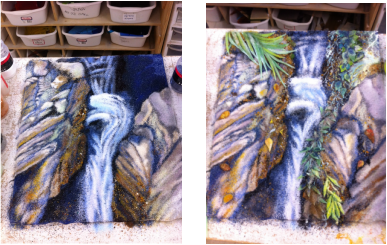
LEFT: Frit shading complete RIGHT: Adding hand cut glass leaves and details

Finished Glass wall art 18 x 20"
4/25/2012 0 Comments It's Show Time!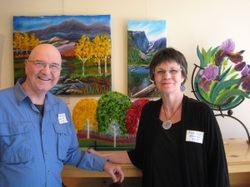 Anne & Richard at Spirits in the Wind Gallery, Golden, Colorado April 2012 Art shows... We love 'em and hate 'em, but it's how most of us get our start, unless we have a rich uncle who could open those doors for us. For years I did outdoor art fairs and from those years I have amazing stories and a few disappointments, but mostly it connected me to the client and helped me define my brand. There were always pluses and minuses. On the plus side: Stories like the woman who was moved to tears over the body of one of my hand painted poppy vases. Or the Des Moines, IA show where one of my pieces was presented as a surprise anniversary gift, producing tears, smiles and hugs all around. These are what makes it all worth while. On the minus side: The endless hours of work, shows where we froze our tails and ones where we nearly got heat exhaustion. Then there was the anxiety produced by wind, hail and rain storms (not a good mix with glass art).... and there were situations like in this video. Nowadays our shows are a bit higher end and we only do gallery shows. Just being indoors is a big help but there are still quite a few challenges. First off, if it's a gallery that's new, it's often difficult to know the market and the customer base. To present the best show, we've learned to bring a spread of price points. But that's tricky for me because the pressure of the preparation always triggers new ideas and gets the creative juices flowing. Not the time when I want to be doing production work but it's important for the clients and the gallery owners to have some small sales as well as the bigger ones that may take a little more time! 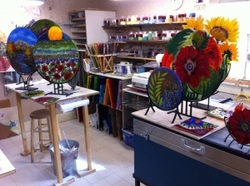 Show Art assembled in the studio Then there's the packing and/or shipping. We have a pretty good track record with this but at the last show in Colorado, my nerves felt every one of those bumps on Denver's weather beaten streets! I'm happy to say that in spite of my anxieties, we arrived with all art safe and sound. So, we work for weeks or months creating a body of work, we pack, we travel. The gallery owners usually hang the show and we arrive and then we wait. The gallery advertises, ads are purchased, we post on Facebook and fliers are sent out; but no one ever knows how many will come. Other events are scheduled for the same night, there are storms and emergencies.....makes one almost long for the outdoor art fair days when the crowds seemed endless.....oh, wait.....that was a different economy, wasn't it? Those shows sold a lot of small pieces to a lot of people. Gallery shows sell a few really good pieces to collectors, which usually means return sales. The other thing shows do is make lasting relationships with gallery owners. We have an opportunity to share about the process and that helps them better represent us. And, for me, it takes us to beautiful places where I can take photos that will lead to a new body of work for the next show. 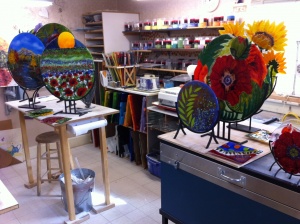 More art in studio 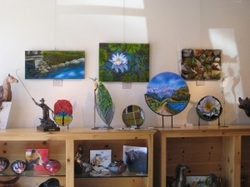 At Spirits in the Wind Gallery All in all, I love doing shows and meeting the wonderful people that make it possible for me to make a living following my dream. If you are an artist... or if that's your dream, I'd encourage you to step out and sign up for some local art fairs. It will push you to create a body of work and enable you to get immediate unbiased feedback which can help define your brand. If you're a collector or just an art lover, I hope you will head out to your next local art fair. Buy what you love and support some of the hardest working folks around. 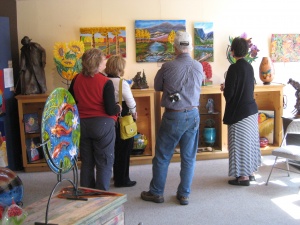 In the previous post I mentioned that for artists, finding out what you want to be is another way of branding your work. In this second part, I’d like to think with you about distractions and how to avoid them. When I quit my day job and got serious about being an artist, I learned some very important things that had little or nothing to do with talent or technique. Here are a few that made the greatest impression on my life: 1. SET STRUCTURED WORK HABITS: When I first started doing this, I couldn’t even take off my pajamas or do dishes for fear of getting distracted. I’d set my alarm, get up, put the coffee on and start working. That’s how determined I was. Now I’m at work by 9 am and work till 5 pm at least five days a week and I wake up every morning excited about going to work. So perhaps coming to the place of that kind of determination is the first and MOST important thing one has to settle. As long as your dream is an optional hobby, it will continue to remain only a dream. 2. PROTECT YOUR TIME: Not only do we have to learn disciplined work habits, we also have to train our friends and family. It’s amazing how many people think that just because you’re home, you’re at their beck and call for chats, coffee or to help them with whatever. We have to protect our time and “train” others to do the same by not returning calls during our working hours. Then, when you do return the call, make a point of saying, “Sorry I couldn’t take your call. I’m off work now so I can talk to you.” It takes time, discipline and patience…. and you may lose a few friends! 3. SILENCING THE CRITIC IN YOUR HEAD: Early on I read “The Artist’s Way” by Julia Cameron. As I did the journaling exercises the book laid out, I learned to first expose and then silence “the critic in my head.” I had no idea how powerful those voices were and how deeply entrenched from childhood the negative comments were and their corresponding thoughts. Once I identified them, they became mere shadows that need only be flicked away like ants at a picnic. 4. SET REASONABLE GOALS: For years I have made it a practice to set “New Year’s Goals” rather than make “resolutions.” The way I do this is to evaluate the past year and search for a word or phrase that distills the essence of the goal; and for me it’s a spiritual process. Last year, the phrase was “spread a big net” and I interpreted that to mean market to the max and widen the line of products. Considering the economy, it was certainly the right move. This year my goal is to “focus and refine”, which leads me into the next topic. 5. FIND YOUR NICHE & MAKE IT YOUR FOCUS: Business 101 says, “Find a need and fill it.” It’s a little different in art, but not much. In art school I dabbled in everything; and school is a great place to dabble. Identify what you love and then find a way to do it better or differently from everyone else. I knew I was a painter but there are a million painters. I needed to find something that made my work stand out…for me, that was glass. But even within glass, there are so many options: you can caste it, make functional pieces, build it into sculptures, use additives in your glass to or fuse metals or micas into it……and on and on. These can be growth-giving departures or distractions. I am constantly tempted by new techniques but right now my mantra is “Do what you do well.” The trick is to keep the work fresh and expand and refine within your niche without getting distracted. Following this recipe, I recently did a small project for a group I belonged to that led me to search through old photos and that led me to a new series I’m calling Remembered Spaces. Below is my favorite of those completed so far, along with the photo used. 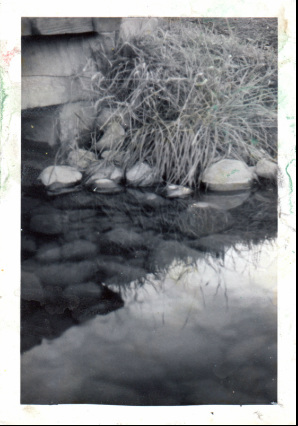
Photo used for "Letting Go"
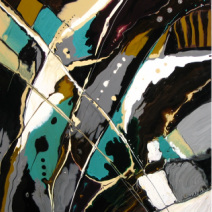 "Retro Schmetro" 2005 18 x 18" wall art, kiln fired pigments on float glass As artists, we often say to each other, "So, have you figured out what you want to be when you grow up?" That's code for, "What are you discovering and how is your work growing?" Makes an interesting question for all of us to ask and keep on asking. It's the kind of inquiry that helps us to continue to grow as humans and as proper creative beings. When I was growing up I knew I wanted to be an artist; but like the young boy who wanted a B-B gun in the movie "A Christmas Story", I was told I'd shoot my eye out. (Translation: You can't make a living making art!) My choices as a young woman in the 50's were limited to Teacher, Nurse, Secretary or Mother. I took what I thought was the easier "mother way." I finally went to university and art school, then two kids and a divorce later settled for life as a Graphic Artist. 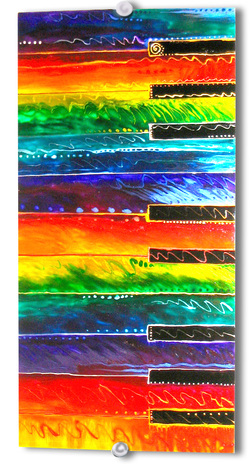 "Piano Forte" 18 x 24" 2004 kiln-fired pigments on float glass But I was always a bit contrary and a whole lot stubborn and what I was told I couldn't do was what I really NEEDED to do. I finally summoned up the courage to step away from the security of a regular paycheck and do what I'd always known I could do..... shoot your eye out or no! Nowadays I see some really talented kids that are given constant encouragement and always told they can do anything they want, and they end up with little or no drive. They seem to dabble in lots of things and accomplish nothing. So perhaps a little hardship and discouragement is good for the soul. Another way of putting it is "Finding your brand." An artist's brand is his or her artistic voice and includes subject matter, style, color palette and much more. I subscribe to a weekly Art News newsletter and skim through the many photos amazed by the diversity. Some of these just make me want to ask "why?" When I was in art school, it was all about angst. You had to create gut wrenching honesty or strong social commentary to qualify as a fine artist. But few people really want to live with gut wrenching angst though it might make great headlines and attract a big crowd at gallery openings. On the other hand, as a glass artist I can create (and have created) lovely sun catchers and Christmas ornaments and have lots of low ticket sales. But, as someone recently asked me, "Is this really what you want to be known for?" 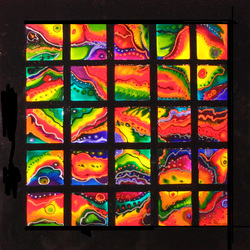 "Shirt Off My Back" 16 x 16" 2002 Kiln-fired pigment on sheet glass A brand is an evolving thing but I think it's important to know, if not what you want to be...at least it's in your general vocabulary. For me, it's about several things: Color, Joy and Nature. Stay with me as I continue to explore this pesky question of branding and knowing what to be as a grown-up. I'm including photos that show a progression of my work over many years. This post illustrates art from the early years of glass beginning with low-fire painted glass. Next time I'll include some early fused pieces. 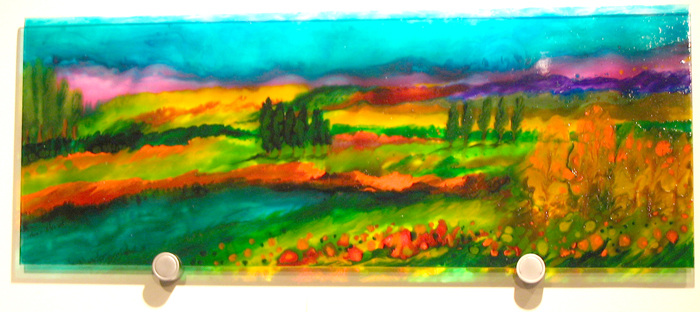 "Long Ago and Far Away" 12 x 22" 2004 kiln-fired pigments on float glass |
all images ©Anne Nye 2015
Archives
November 2015
|
 RSS Feed
All images ©Anne Nye 2018 All rights reserved.